
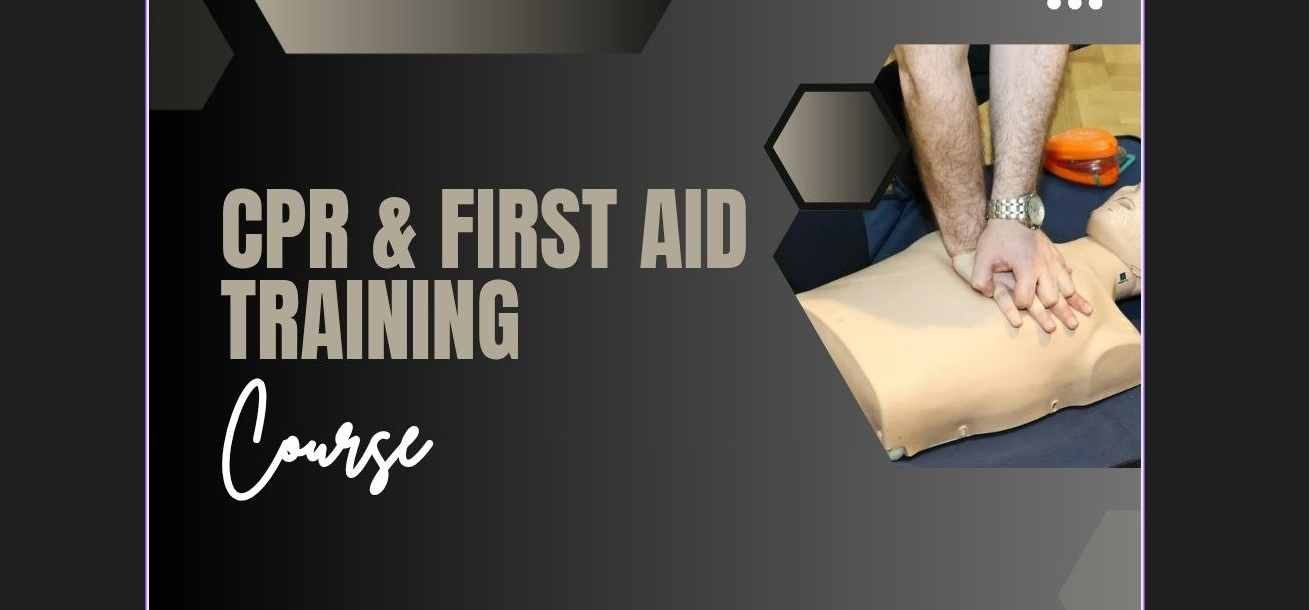
CPR & First Aid Training Course: Emergency Response & Life-Saving Skills

Categories: Medical
Wishlist Share

About Course

The CPR & First Aid Training Course is a practical, hands-on program designed to equip participants with essential skills for responding confidently and safely to common emergencies.

The course covers basic life support, cardiopulmonary resuscitation (CPR), use of an automated external defibrillator (AED), choking response, bleeding, wounds, burns, fractures, shock, and other common first-aid situations. Participants will learn how to assess an emergency, activate appropriate emergency services, provide immediate assistance, and continue care until professional medical help arrives.

The training combines instructor demonstrations, hands-on practice, simulated emergency scenarios, and practical assessments to help participants build confidence in responding to emergencies.

What Will You Learn?

  • Assess an emergency situation safely
  • Activate appropriate emergency medical assistance
  • Perform CPR according to current training guidance
  • Use an AED safely and appropriately
  • Respond to choking emergencies
  • Provide basic first aid for bleeding and wounds
  • Provide appropriate initial care for burns
  • Recognize suspected fractures, sprains and other injuries
  • Recognize signs of shock and serious medical emergencies
  • Place an appropriate person in the recovery position when indicated
  • Respond calmly and effectively during an emergency
  • Understand when professional medical assistance is required

Course Content

Introduction to First Aid
Importance and principles of first aid Assessing an emergency situation Scene safety Primary assessment Calling and coordinating emergency assistance Protecting yourself and the injured person

Cardiopulmonary Resuscitation (CPR)
Understanding cardiac arrest Recognizing the need for CPR Adult CPR Child and infant CPR Chest compressions and rescue breaths Single-rescuer CPR Two-rescuer CPR basics

Automated External Defibrillator (AED)
Introduction to AEDs When an AED should be used Safe AED operation AED-assisted CPR Safety precautions during defibrillation Practical AED training

Choking Emergencies
Recognizing choking Mild vs. severe airway obstruction Adult choking response Child and infant choking response Appropriate emergency response When to seek further medical assistance

Bleeding & Wound Management
Recognizing serious bleeding Direct pressure Basic wound care Bandaging and dressings Management of nosebleeds Recognizing signs of shock When emergency medical care is required

Burns & Scalds
Types of burns Immediate first-aid response Thermal and chemical burns Electrical-burn considerations What not to do when treating burns Recognizing serious burns requiring medical attention

Fractures, Sprains & Injuries
Recognizing suspected fractures Sprains and strains Basic immobilization principles Safe movement and positioning Head, neck and spinal injury awareness When to call emergency services

Shock & Medical Emergencies
Understanding shock Signs and symptoms Basic first-aid response Fainting Seizures Breathing difficulties Chest pain Diabetic emergencies Recognizing serious medical conditions

Environmental & Other Emergencies
Heat-related illness Hypothermia and cold-related emergencies Bites and stings Poisoning awareness Eye injuries Basic emergency response principles

Practical Emergency Response
Emergency scene assessment CPR practice AED practice Choking-response practice Bandaging and wound-care exercises Recovery-position practice Emergency scenario simulations Practical skills assessment